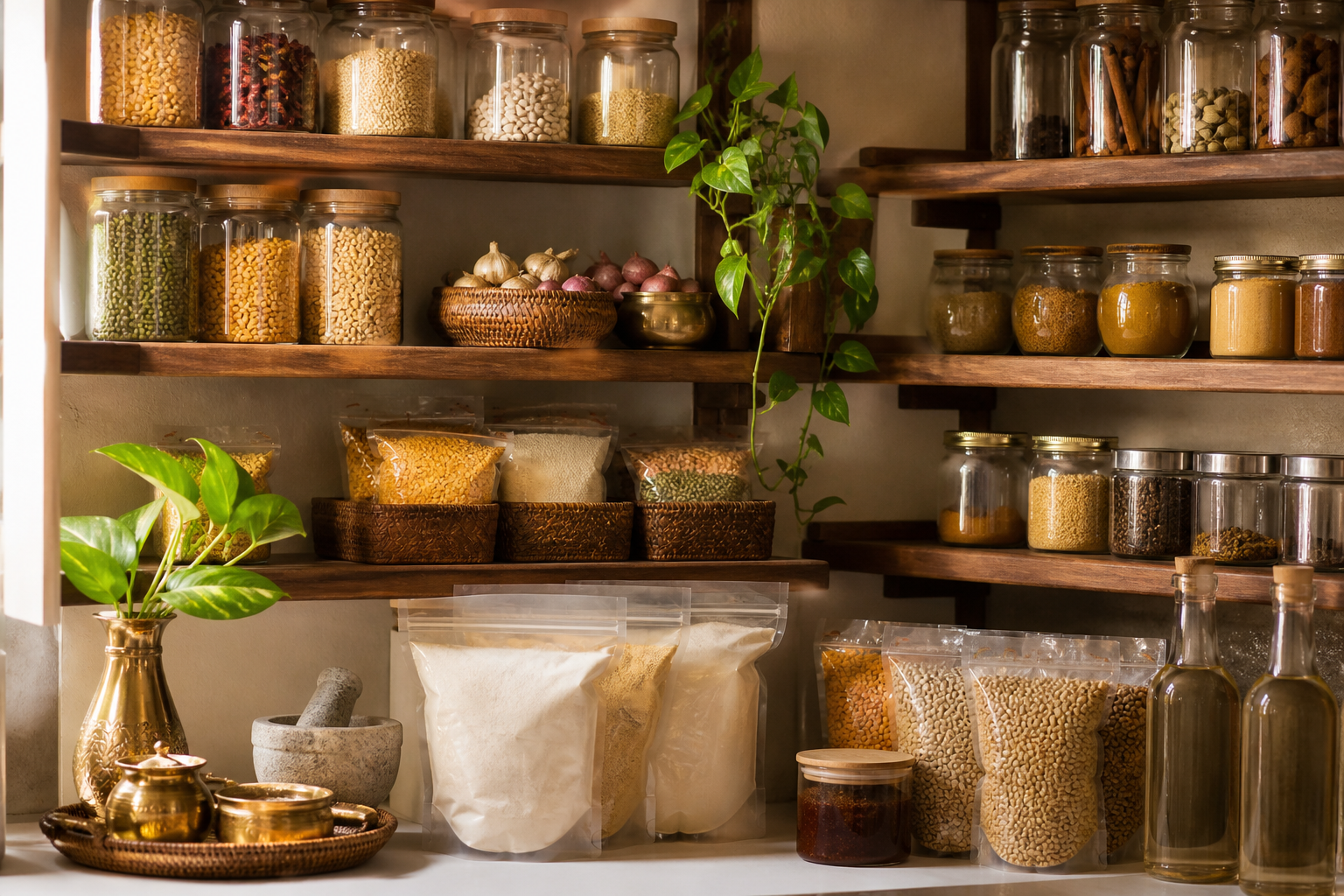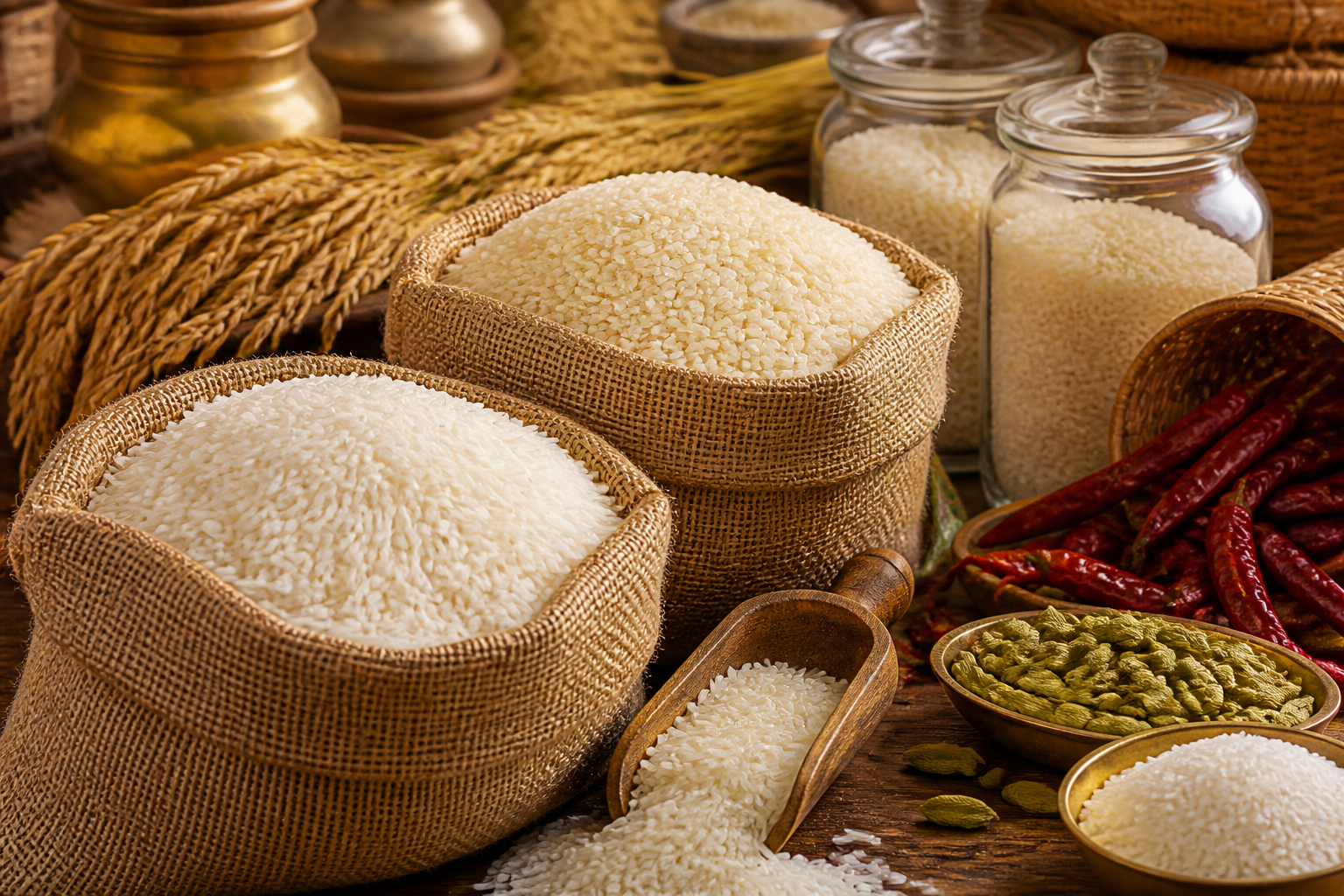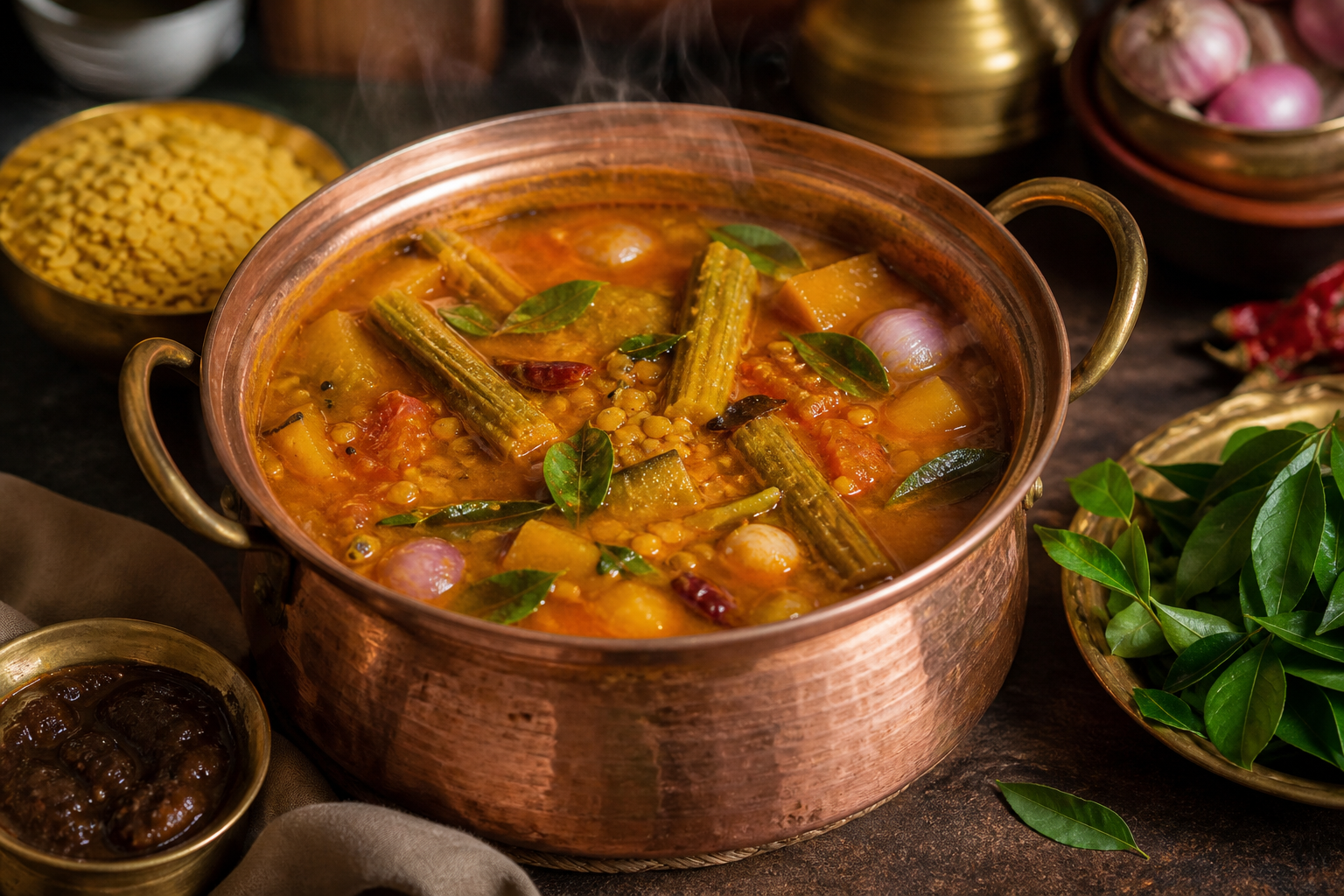


Walk into any South Indian kitchen and you will notice the same quiet heroes sitting on the shelf: mustard seeds that crackle in hot oil, bright turmeric that stains the spoon gold, and curry leaves that perfume the whole room. At Chozhan Palporul Vaanibam in Drancy, these spices are not decorative jars — they are the foundation of breakfast, lunch, and festival feasts.
If you are setting up a South Indian pantry in France, start with a small, purposeful collection rather than buying every powder at once. Fresh, well-stored spices deliver more aroma, better colour, and cleaner flavour than a crowded cupboard of half-used packets.

1. The tempering trio: mustard, cumin, and curry leaves
Most Tamil dishes begin with thalippu — a quick tempering in oil or ghee. Black mustard seeds pop first, releasing a nutty bitterness. Cumin seeds follow with warmth and earthiness. Fresh or carefully dried curry leaves finish the base with citrusy fragrance. Keep mustard and cumin whole, not powdered, so they bloom properly in hot oil. Refresh curry leaves often; they lose character when they sit too long.
2. Colour and depth: turmeric and red chilli
Turmeric powder is used in almost every sambar, kuzhambu, and vegetable stir-fry. A little goes a long way — too much can taste medicinal. Pair it with a chilli that matches your heat preference: Kashmiri-style powders for colour with mild warmth, or hotter Guntur-style blends when you want a sharper kick. Whole dried red chillies are useful for tempering and for grinding fresh chilli powder at home.
3. Everyday aromatics: coriander, fenugreek, and asafoetida
Coriander seeds are the backbone of many homemade powders. Fenugreek seeds add a gentle bitterness that balances tamarind-based gravies. Asafoetida (hing) is the secret that makes lentil dishes taste rounded and savoury, especially in vegetarian cooking where onion or garlic may be skipped on fasting days. Use hing sparingly — a pinch in hot oil is enough.
4. Ready blends that save weeknights
Even dedicated cooks keep a few reliable powders on hand: sambar powder, rasam powder, and a good garam masala or kitchen king-style blend for North-meets-South fusion nights. Buying these from a trusted Indian grocery means the roast and grind ratios are already balanced. Store them in airtight containers away from the stove so steam and heat do not dull the oils inside the spices.
A practical starter kit for a French apartment kitchen might include mustard seeds, cumin seeds, turmeric, chilli powder, coriander seeds, fenugreek, hing, curry leaves, and one quality sambar powder. From that base you can cook idli sambar, rasam, poriyal, and countless weekday curries without improvising substitutions that change the dish.
When you shop at Chozhan, open a packet and smell it. Bright, clean aroma means the spice still has life. Dull or dusty scent usually means it has been sitting too long. Rotate stock the way restaurants do: finish older jars first, label open dates, and buy whole spices in quantities you will actually use within a few months.
Master these essentials and every recipe that follows — from soft idlis to festival sweets — will taste closer to the kitchens you grew up with, even thousands of kilometres from Tamil Nadu.