





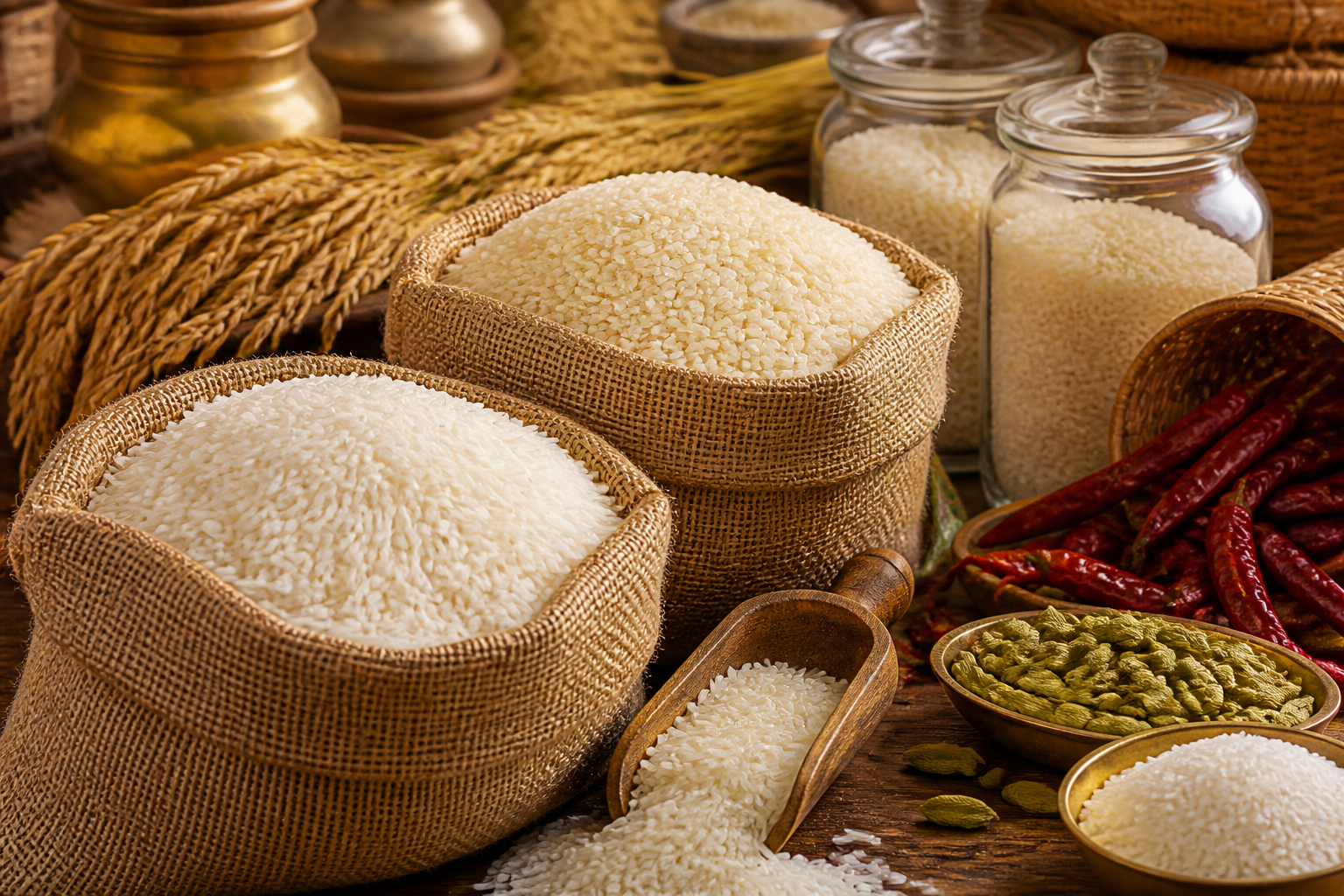
Rice is not one ingredient in a South Indian household — it is a category. The grain that makes biryani fluffy is not the grain that ferments into soft idli. The everyday pot of steamed rice on a weekday plate may be different again. Shopping without knowing the differences leads to frustration: sticky biryani, dense idlis, or bland daily rice that refuses to separate.
Chozhan Palporul Vaanibam stocks multiple rice varieties because our customers cook multiple kinds of meals. This guide helps you match grain to purpose.

Basmati for biryani and pulao
Long-grain basmati is prized for length, aroma, and separate cooked grains. Soak before cooking, use the absorption method or carefully drained boiling, and fluff gently with a fork. Aged basmati usually performs better than very new stock. For dum biryani, grain integrity matters as much as spice layering — broken rice will turn mushy under steam.
Idli and dosa rice
Idli rice (often parboiled short-grain) is chosen for fermentation and soft steamed texture. It is the wrong choice for elegant biryani and the right choice for batter. If your idlis are consistently dense despite good fermentation, revisit the rice quality before blaming your steamer.
Sona masoori and everyday table rice
Lightweight medium grains such as sona masoori are popular for daily meals with sambar, rasam, and poriyal. They cook relatively quickly, taste clean, and sit comfortably beside spicy sides. Many families keep a big bag of everyday rice and smaller bags of specialty rice for weekends and festivals.
Other grains worth knowing
Ponni rice is another South Indian favourite for steamed rice. Matta or Kerala red rice brings a robust, wholesome character to meals. Some cooks keep raw rice for certain sweets and snacks. Read labels carefully — “rice flour” is not interchangeable with whole grain rice, and “idli rava” is a convenience product with its own method.
Storage tips for European kitchens: keep rice in airtight containers to deter pantry pests, buy bag sizes you will finish within a reasonable time, and note the harvest or pack information when available. Humidity and warmth can affect quality over long storage.
When in doubt, tell your grocer what you are cooking. A good Indian store team would rather send you home with the correct five-kilo bag than watch you fight the wrong grain for an hour. Match basmati to celebration rice dishes, idli rice to batter, and a soft everyday variety to your lunch plate — and suddenly recipes that felt inconsistent start behaving the way the cookbook promised.
Stock smart, cook with intention, and let each rice variety do the job it was grown for. Your biryani, your idli, and your simple sambar-sadham will all thank you.